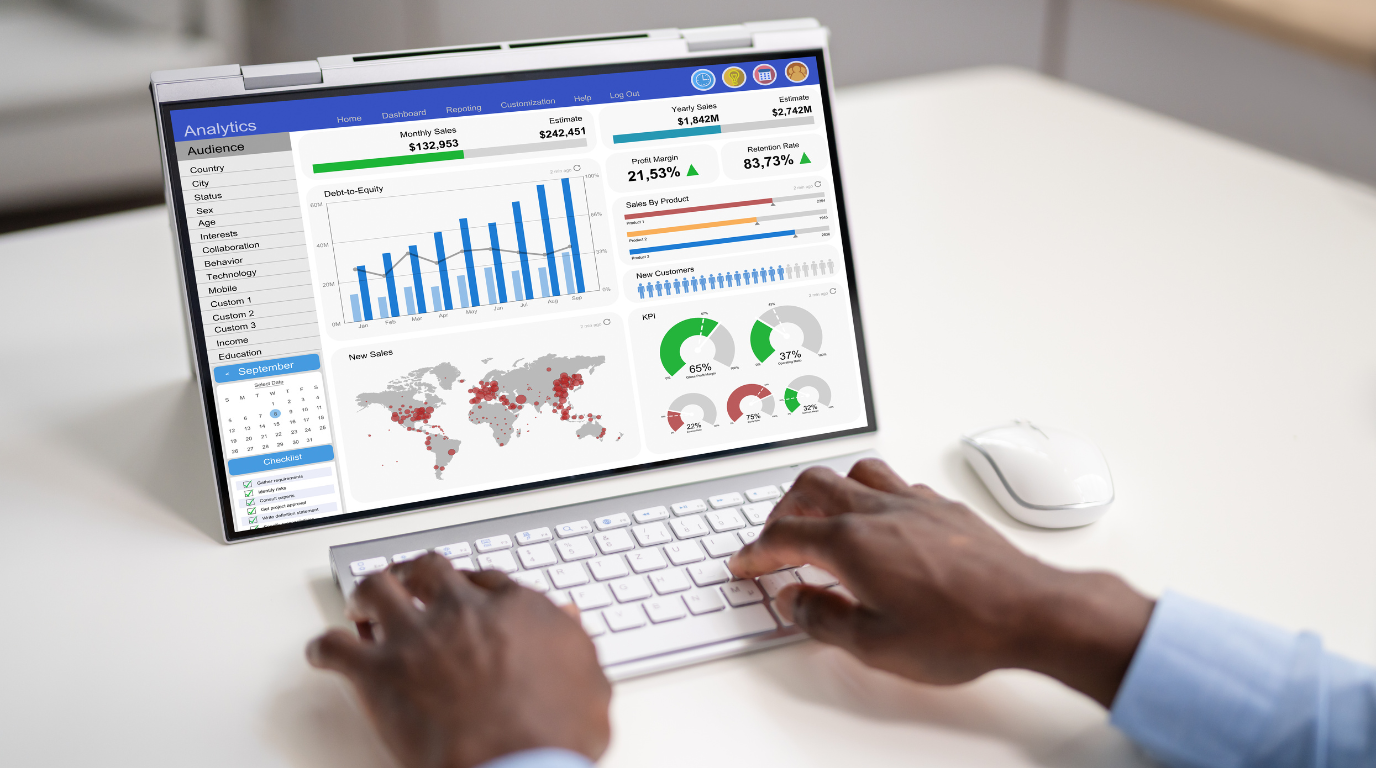
Why Dashboards Fail Without Strong Data Engineering

Organizations invest heavily in dashboards hoping they will deliver better business insights. Yet many leadership teams still spend hours validating reports, reconciling numbers across departments, and questioning whether the data can be trusted.
The dashboard is rarely the problem. The real challenge lies in the engineering behind it.
Without reliable data pipelines, clean datasets, scalable architecture, and continuous monitoring, even the most sophisticated analytics platform becomes another interface displaying inaccurate information.
According to Gartner, poor data quality costs organizations an average of $12.9 million every year, highlighting why data engineering has become a business priority rather than just an IT function.
Here are six data engineering challenges we frequently see and how we approach them at AcmeMinds.
ETL vs ELT Isn’t the Real Problem
Many discussions around modern data engineering focus on choosing between ETL and ELT. While both approaches have their place, the technology itself rarely determines project success.
What matters is whether your data architecture supports the needs of the business.
One mistake we repeatedly see is organizations spending weeks evaluating ETL tools before defining ownership of their business data. Choosing between ETL and ELT is relatively straightforward. Aligning customer, inventory, financial, and operational data across multiple systems is where most projects succeed or fail.
We often see organizations selecting tools before understanding how data will move across operational systems, analytics platforms, and reporting environments. This creates unnecessary complexity as the business grows.
What we’ve learned
- Start by defining business rules before selecting technologies.
- Design data pipelines around business outcomes instead of individual applications.
- Build flexible architectures that allow new data sources, cloud platforms, and AI initiatives to be added without redesigning the entire platform.
Broken Data Pipelines Create Broken Dashboards
Business leaders often blame dashboards when reports appear inconsistent.
In reality, dashboards simply visualize the information they receive.
If customer data arrives late, inventory records are duplicated, or financial transactions fail during ingestion, every report built on top of those datasets becomes unreliable.
This is where robust data engineering makes the difference.
For one of our enterprise data engineering engagements, the challenge was not visualization but fragmented information spread across multiple systems. By building reliable ingestion pipelines, automating data movement, and centralizing information into a scalable data platform, reporting became significantly more consistent and decision making became faster because teams were working from the same source of truth.
A mistake we see often
- Investing in new BI tools before fixing the underlying data pipelines.
- Allowing multiple departments to maintain separate versions of the same dataset.
- Assuming data integration is a project instead of an ongoing engineering capability.
Data Quality Is an Engineering Problem
Many organizations assign data quality ownership to business teams after reports have already been generated.
By then, the damage has already been done.
Data quality should be built into every stage of the pipeline.
Validation rules, duplicate detection, schema enforcement, and automated quality checks should happen before information reaches business users.
How we approach it at AcmeMinds
- Establish validation rules during data ingestion.
- Monitor data completeness and consistency continuously rather than periodically.
- Automate anomaly detection so issues are identified before they affect business reporting.
- Reliable analytics begin with reliable engineering.
Building reliable analytics requires much more than cleaning data after it reaches a dashboard. It starts with establishing a strong data engineering foundation that supports governance, consistency, scalability, and trusted reporting across the organization. Learn more about the core principles in our guide on Data Engineering Foundations for Enterprise Analytics That Power Scalable, Trusted Insights.
Schema Design Shapes Business Decisions
Schema design is often viewed as a purely technical exercise. In practice, it directly affects how easily organizations can answer business questions.
Poor schema design leads to slow queries, duplicated information, and inconsistent reporting across departments. Well structured schemas improve performance while making analytics more intuitive for business users.
We’ve seen organizations invest in powerful analytics platforms only to discover that inconsistent customer IDs, product definitions, and business rules prevent teams from answering even basic operational questions.
One lesson we’ve consistently observed across enterprise implementations is that organizations spend far less time building reports when their underlying data model reflects actual business processes instead of individual applications.
Our perspective
- Design schemas around business entities rather than software systems.
- Keep naming conventions consistent across the organization.
- Review data models as business requirements evolve rather than allowing complexity to accumulate.
Data Observability Keeps Analytics Reliable
Most organizations monitor application performance. Far fewer monitor the health of their data.
Data observability provides visibility into pipeline failures, unexpected volume changes, missing records, and quality issues before they reach business stakeholders.
Without observability, reporting errors are often discovered during executive meetings instead of within engineering workflows.
Key takeaway
- Monitor pipeline health continuously.
- Track freshness, completeness, and accuracy across critical datasets.
- Treat data reliability with the same importance as application uptime.
- The goal is not simply moving data.
- The goal is building confidence in every business decision.
Designing Data Platforms That Scale
The true measure of a successful data platform is not how well it performs today. It is how easily it adapts tomorrow.
As businesses grow, new applications, customers, integrations, and analytics requirements place increasing pressure on existing infrastructure. A scalable architecture prevents growth from becoming a technical obstacle.
Building a scalable platform requires careful planning around ingestion, storage, transformation, governance, and cloud architecture. If you’re planning a modern analytics platform, our guide on How to Build a Scalable Data Engineering Platform for Multi Source Analytics explores the architectural considerations in greater detail.
This principle guided one of our inventory management implementations where scalable data architecture enabled inventory information to remain synchronized across operations while supporting future expansion. Instead of solving an immediate reporting challenge, the platform created a foundation capable of supporting long term operational growth without repeated redesign.
Our approach
- Design for future integrations even if they aren’t part of today’s roadmap.
- Build cloud native data platforms that can scale independently across ingestion, transformation, and analytics.
- Establish governance early so business definitions remain consistent as the organization grows.
Final Thoughts
Dashboards have never been easier to build. Trusted data has never been more important.
Organizations often invest in visualization platforms expecting better decisions, when the real opportunity lies in strengthening the engineering behind the data.
Across the projects we’ve delivered at AcmeMinds, one pattern continues to emerge. Businesses that invest in scalable pipelines, reliable data quality, thoughtful architecture, and continuous observability spend less time questioning reports and more time acting on them.
FAQs
1. What is data engineering and why is it important?
Data engineering is the process of collecting, transforming, storing, and preparing data for analytics, business intelligence, AI, and reporting. A strong data engineering foundation ensures dashboards, reports, and AI models are built on accurate, reliable, and consistent data.
2. What is the difference between ETL and ELT?
ETL transforms data before loading it into a data warehouse, while ELT loads raw data first and performs transformations afterward. The best approach depends on your data volume, cloud architecture, performance requirements, and business objectives.
3. Why are my business dashboards showing different numbers?
Inconsistent dashboards are often caused by fragmented data sources, conflicting business rules, poor data quality, or unreliable data pipelines. Implementing standardized data engineering practices creates a single source of truth and improves reporting accuracy.
4. How do data pipelines improve business intelligence?
Data pipelines automate the movement, transformation, and validation of data across systems. Well-designed pipelines deliver accurate, timely, and consistent information to business intelligence platforms, enabling reliable reporting and faster decision-making.
5. What are the biggest challenges in data engineering?
Common data engineering challenges include poor data quality, disconnected systems, unreliable data pipelines, limited data observability, inconsistent data models, and architectures that struggle to scale as business needs grow.
6. When should a company invest in data engineering services?
Organizations should invest in data engineering when reporting becomes inconsistent, teams spend excessive time preparing data manually, systems cannot communicate effectively, analytics lose reliability, or the business is preparing for AI, machine learning, or large-scale digital transformation.
More on Data Engineering

Data Engineering Foundations for Enterprise Analytics That Power Scalable, Trusted Insights