Web vs Mobile App: What to Build First?

Choosing between a web app and a mobile app is one of the first product decisions founders and product teams need to make. The right choice affects development cost, launch speed, user adoption, and long term scalability.
There is no universal answer. The right approach depends on what you are building, who will use it, and how quickly you need to validate the product.
For most early stage teams, this decision is less about platform preference and more about business priorities. The first version of your product should reduce time to market, support user adoption, and create room for iteration without unnecessary complexity.
According to reports, mobile apps were expected to generate over $613 billion in revenue globally in 2025, reflecting how central app experiences have become to digital product strategy.
Web App vs Mobile App: Quick Overview
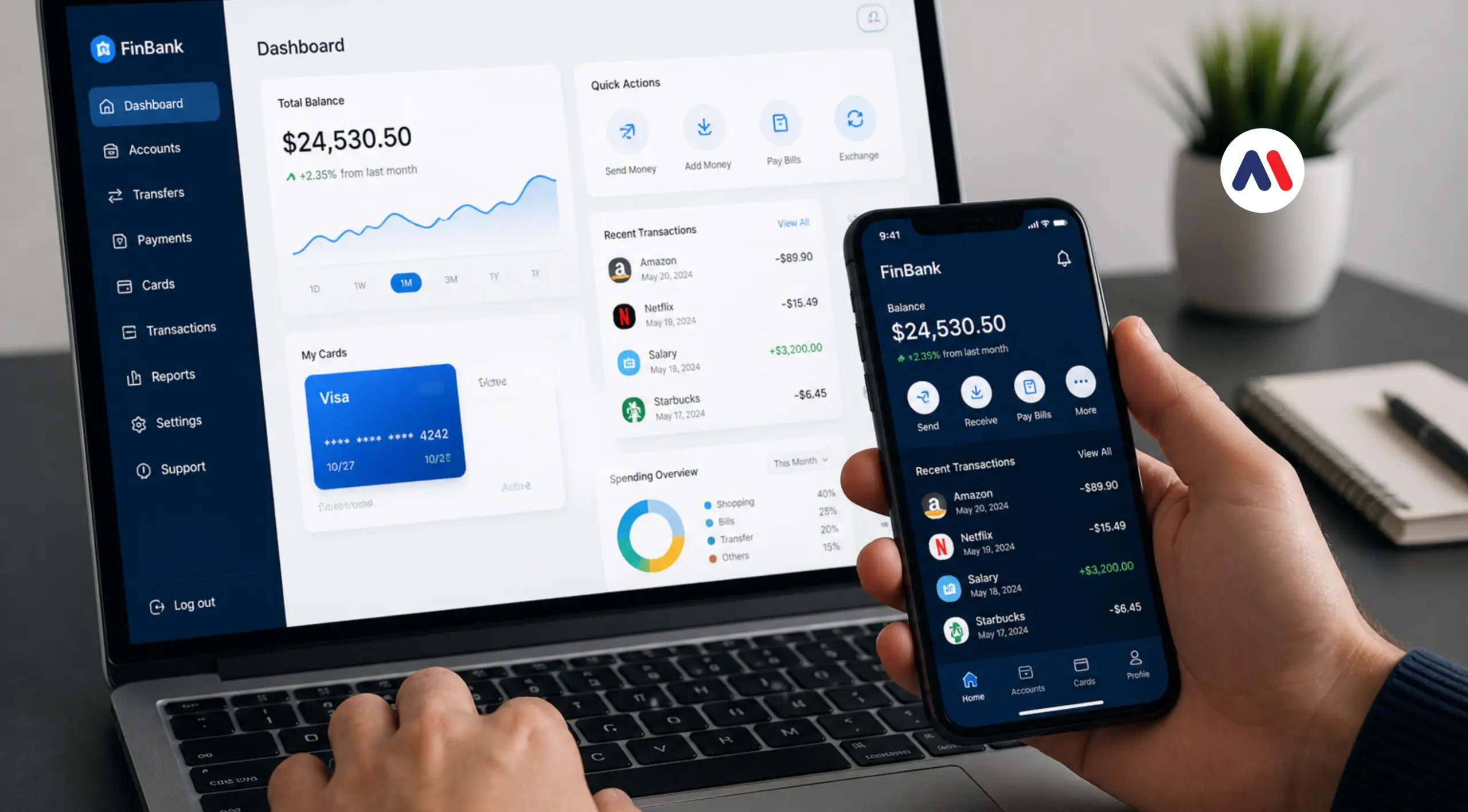
A web app runs in a browser and is accessed through a URL. Users do not need to install anything, which makes access immediate and frictionless. It works across devices and operating systems through a single codebase, making it easier to launch, manage, and scale efficiently.
A mobile app is installed directly on a smartphone or tablet. It is built for a specific operating system such as iOS or Android and is optimized for the native device environment. This allows it to deliver better performance and access device features such as push notifications, camera, GPS, and offline storage more efficiently.
In simple terms:
Web apps are best for
- Faster launches because users can access the product instantly without installation.
- Broader accessibility across devices and operating systems through a single deployment.
- Lower development cost due to one shared codebase and simpler infrastructure needs.
- Easier maintenance with centralized updates and no dependency on app store approvals.
Mobile apps are best for
- Stronger user engagement through push notifications and habitual daily usage.
- Better performance with faster load times and smoother native interactions.
- Richer user experience through mobile-first design and optimized responsiveness.
- Deeper device integration with direct access to hardware and offline capabilities.
The decision should be based on user behavior, technical requirements, and product function. The right choice depends on how users interact with the product, what experience the platform needs to deliver, and how the business plans to scale.
When to Choose a Web App First
A web app is often the right starting point for MVP development because it is faster to build, easier to maintain, and more cost-efficient to launch. It allows teams to validate product demand quickly, release updates faster, and reduce early development complexity without managing multiple platforms.
Choose a web app first when:
- Your goal is to validate demand quickly and test product-market fit with minimal development overhead.
- Users need access across both desktop and mobile without requiring separate platform-specific applications.
- Your product relies on forms, dashboards, portals, reporting systems, or internal workflows.
- Speed to market matters more than native device features such as GPS, camera, or offline access.
- You want one shared codebase to simplify iteration, maintenance, and early-stage product updates.
Web apps are especially effective for SaaS products, admin platforms, B2B tools, marketplaces, and customer portals where accessibility, speed, and operational efficiency matter most. For example, platforms like Notion, HubSpot, and Stripe rely heavily on web-first experiences because their core value is tied to workflows, dashboards, collaboration, and account management rather than native mobile functionality.
For most startups, a web app is the most efficient way to test product-market fit before investing in platform-specific mobile development. It reduces upfront cost, shortens launch timelines, and creates a more practical foundation for early product validation.
When to Choose a Mobile App First
A mobile app makes more sense when the product experience depends on mobile behavior, device hardware, or frequent user engagement. It is often the stronger choice when speed, convenience, and native device access are central to how users interact with the product.
Choose a mobile app first when:
- Your users interact primarily on smartphones and expect a mobile-first experience.
- The product depends on device features such as GPS, camera, notifications, or biometric authentication.
- User engagement relies on fast, repeat access throughout the day.
- Offline functionality is important for usability and continuity.
- The overall experience is built around mobile convenience, responsiveness, and real-time interactions.
Mobile-first products often include fitness and wellness apps, social platforms, consumer marketplaces, delivery and logistics apps, fintech tools, and on-demand services. For example, platforms like Uber, Duolingo, and MyFitnessPal are built around frequent mobile interactions, location-aware functionality, and daily user engagement, making mobile the most effective starting point.
If mobile usage is core to the product experience, building a mobile app first usually leads to stronger adoption, higher retention, and a more natural user experience.
Web App vs Mobile App Comparison Table
| Decision Factor | Web App | Mobile App |
|---|---|---|
| Development Cost | Lower upfront cost with one codebase across devices and browsers. Ideal for cost-efficient MVP development. | Higher upfront cost due to platform-specific development, testing, and deployment. |
| Time to Market | Faster to build and launch with shorter release cycles and no app store approvals. | Longer development timeline due to native builds, app store reviews, and extended QA. |
| Maintenance and Updates | Easier to maintain with centralized updates and no user-side downloads. | Requires version control, app store releases, and user updates. |
| User Accessibility | Instantly accessible through a browser with no installation required. | Requires installation, adding friction to initial access. |
| User Experience | Convenient and accessible, but limited by browser constraints. | Smoother, faster, and more optimized for native interactions. |
| Discoverability | Easier to discover through search engines, links, and browser access. | Less discoverable outside app store ecosystems. |
| Engagement and Retention | Better for utility-driven use cases with moderate repeat usage. | Better for retention through push notifications and faster repeat access. |
| Performance | Works well for lightweight workflows, dashboards, and browser-based tools. | Delivers stronger performance for real-time and interaction-heavy experiences. |
| Native Device Features | Limited access to device hardware via browser APIs. | Full access to GPS, camera, biometrics, notifications, and offline storage. |
| Offline Functionality | Limited offline support depending on browser capabilities. | Stronger offline support with better reliability and control. |
| Best Fit Use Cases | SaaS platforms, B2B tools, admin dashboards, and customer portals. | Consumer apps, delivery platforms, fintech tools, and on-demand services. |
| Best Choice for MVP | Best when speed, budget, and fast iteration matter most. | Best when mobile behavior and daily engagement drive product value. |
MVP Strategy: What Should You Build First
For most MVPs, the best starting point is the platform that helps you validate demand with the least cost, risk, and development complexity.
That usually means:
- Start with the web if speed, reach, and faster testing matter most.
- Start with mobile if engagement, retention, and device behavior are central to the product.
The best MVP strategy is not about launching on every platform at once. It is about launching where learning happens fastest and product assumptions can be tested with the least friction.
Build the smallest version that helps you validate:
- Who the user is.
- What they need most.
- How they behave.
- What they are willing to pay for.
That is the real purpose of an MVP: to reduce uncertainty before scaling development.
Real-World Use Case Scenarios
The right platform depends on how the product is used in real-world conditions, not just on feature preference. The best starting point is the one that aligns with user behavior, usage environment, and core product functionality.
Choose web first
- HubSpot is a strong web-first product because users rely on dashboards, reporting, contact management, and multi-user workflows across teams.
- Figma is built around web-first usage because collaboration, design reviews, and large-screen workflows are central to the product experience.
Choose mobile first
- Uber is a clear mobile-first product because the core experience depends on GPS, push notifications, live tracking, and real-time user actions.
- Duolingo is designed for mobile-first engagement because daily reminders, short repeat sessions, and habitual usage drive retention.
The right platform is the one that best supports how users interact with the product in everyday use.
Can You Build Both Later?
Yes – and for most startups, that is the more strategic path.
Many successful products do not launch on web and mobile at the same time. They start with one platform, validate real demand, and expand only after they know what users actually need. This keeps early product decisions focused on traction, not unnecessary build scope.
That approach reduces:
- Upfront development cost before demand is proven.
- Technical overhead from managing multiple platforms too early.
- Product risk by limiting what needs to be built and maintained.
- Engineering waste on features users may never adopt.
A common expansion path looks like this:
- Launch a focused MVP on one platform.
- Validate demand, usage patterns, and conversion.
- Identify the highest-value second-platform use cases.
- Expand to web or mobile once the need is proven.
This is how many successful products scale. They do not build everywhere first. They build where learning is fastest, then expand where growth is strongest.
Conclusion
Choosing between web app development and mobile app development comes down to how your product creates value, how users interact with it, and what the business needs to validate first. The right platform is not the one with more features. It is the one that best supports user behavior, product usability, and long term growth.
For some products, a web app offers the fastest path to market with lower cost, broader accessibility, and easier iteration. For others, a mobile app creates a stronger experience through better engagement, native performance, and deeper device integration. The right decision comes from aligning platform choice with product function, user expectations, and business goals, an approach every strong MVP Launch Playbook for Startups should account for early in the product journey.
At AcmeMinds, we help businesses make that decision with clarity through product strategy, web app development, and mobile app development built for scale. Whether you are validating a new idea or planning long term product growth, the right platform decision creates a stronger foundation for everything that follows.
FAQs
1. Is it better to build a web app or a mobile app first?
For most MVPs, a web app is the better first step because it is faster to build, easier to maintain, and less expensive to launch.
2. Is a web app cheaper than a mobile app?
Yes. Web apps usually cost less because they use a single codebase and do not require separate platform specific development.
3. When should a startup build a mobile app first?
A startup should build a mobile app first when the product depends on smartphone behavior, native device features, or frequent user engagement.
4. Can a web app become a mobile app later?
Yes. Many products launch as web apps first and expand into mobile apps after validating demand and user behavior.
5. Which is faster to build for an MVP?
A web app is usually faster to build because development, testing, and deployment are simpler than native mobile app workflows.
6. Which is better for SaaS, web or mobile?
Web apps are usually better for SaaS products because they support dashboards, workflows, reporting, and broader accessibility across teams.