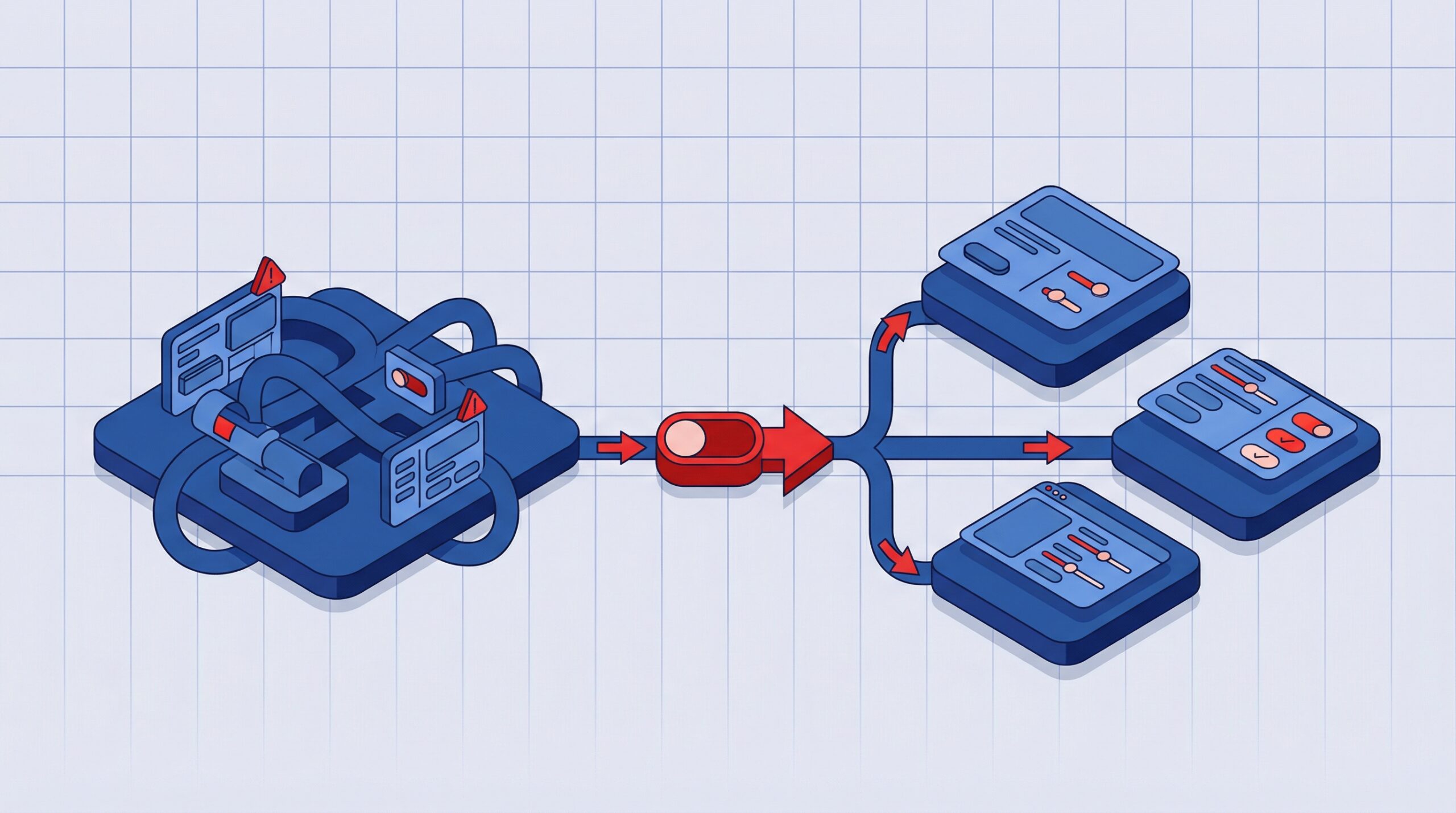
UX Design for Secure Healthcare SaaS

Healthcare software operates where patient safety, regulation, and clinical efficiency meet. Unlike consumer apps, poor design does more than frustrate users. It can delay care, create documentation errors, and add to physician burnout.
Most healthcare organizations feel the tension. Compliance teams prioritize protecting patient data. Clinical teams need systems that are fast, intuitive, and aligned with real workflows. When usability is ignored, adoption drops. When compliance is overlooked, risk grows.
The goal is not to choose between HIPAA compliance and usability. It is to build Healthcare SaaS platforms where security, clarity, and workflow efficiency function as one system.
This article draws from industry research and hands on project experience to outline practical strategies for designing secure, compliant, and clinically effective healthcare software.
Why Usability Is a Patient Safety Issue
Healthcare UX is often discussed in terms of efficiency. In reality, it is closely tied to safety and clinician well being.
Research published by the American Medical Association reports that the average usability of electronic health records (EHRs) was graded an ‘F’ by nearly 900 physicians, and that for each one-point increase in EHR usability, the odds of physician burnout dropped by about 3 %. Burnout is not only a workforce issue. It directly affects patient outcomes, documentation accuracy, and clinical decision making.
When clinicians navigate through cluttered dashboards, redundant fields, and constant alerts, cognitive load increases. Over time, this leads to fatigue and reduced engagement.
Effective Healthcare SaaS UX should therefore:
- Reduce unnecessary documentation steps
- Surface clinically relevant information first
- Minimize alert fatigue
- Support rapid navigation between patient records
- Align with regulatory safeguards without slowing workflow
Usability in healthcare is not optional. It is a structural requirement.
Designing Healthcare SaaS Within HIPAA Compliance Frameworks
HIPAA compliance is foundational to any healthcare software product in the United States. However, compliance does not mean adding visible friction at every step.
Strong HIPAA compliant UX design focuses on integrating privacy and security directly into system architecture.
Core compliance driven design principles
Role based access control
Physicians, nurses, administrators, and billing teams should only see the data relevant to their responsibilities. This reduces risk and improves clarity.
Context aware data exposure
Avoid displaying full patient identifiers in areas where they are not required.
Transparent security states
Users should clearly understand when a record is restricted, shared, or locked.
Readable digital consent workflows
Consent forms should be legally sound yet written in plain language. Clarity improves both compliance and trust.
Secure Yet Simple Authentication in Healthcare Applications
Authentication is one of the most sensitive aspects of Healthcare SaaS UX. Systems must protect patient data while enabling clinicians to move quickly between tasks.
Overly complex login flows can slow care delivery. Weak authentication creates regulatory exposure.
Best practices for healthcare authentication design
Adaptive multi factor authentication
Trigger additional verification when risk levels change such as new devices or unusual access patterns.
Biometric authentication for mobile platforms
Fingerprint and facial recognition reduce password fatigue for clinicians working across devices.
Intelligent session management
Shorter session limits for shared workstations. Context sensitive sessions for trusted environments.
Clear and compliant error messaging
Error states should guide the user without revealing system vulnerabilities.
UX Challenges in EHR and Telehealth Platforms
Electronic Health Record systems and telehealth applications present unique usability challenges.
Common EHR usability issues
- Overloaded patient summary screens
- Multiple clicks for simple documentation tasks
- Alert fatigue from low priority notifications
- Poor prioritization of abnormal lab results
- Inconsistent data hierarchy across modules
These issues create friction during patient consultations and increase after hours documentation work.
Telehealth UX pain points
- Complicated appointment booking flows
- Unclear device compatibility guidance
- Audio and video troubleshooting confusion
- Limited visual cues during virtual care sessions
Telehealth platforms must accommodate both clinicians and patients, many of whom have varying levels of technical literacy.
Practical design improvements
- Task based dashboards that reflect real clinical workflows
- Collapsible sections to reduce visual clutter
- Visual prioritization of abnormal results
- Pre visit technical checks for telehealth sessions
- Clear system status indicators during live consultations
Data Visualization for Clinical Decision Making
Healthcare data visualization requires precision. Clinical dashboards are not business analytics tools. They support real time decision making.
Effective clinical data visualization should:
- Highlight abnormal values immediately
- Show trends over time rather than isolated readings
- Use consistent medical color conventions
- Avoid decorative elements that distract from interpretation
- Enable side by side comparison of treatment progress
Clear hierarchy and restrained visual design reduce interpretation errors. In clinical contexts, clarity directly influences outcomes.
Reducing Cognitive Overload for Medical Professionals
Medical professionals operate in high pressure environments. Software must simplify their mental workload rather than add to it.
Cognitive overload in healthcare applications often results from excessive alerts, redundant documentation fields, and inconsistent interaction patterns.
Strategies to reduce cognitive burden
- Group related actions within a single workflow
- Limit non critical notifications
- Use progressive disclosure for advanced functionality
- Apply smart defaults where clinically appropriate
- Maintain consistent layout patterns across modules
Reducing cognitive load improves adoption and decreases error rates. It also supports clinician well being, which is increasingly recognized as a strategic priority for healthcare systems.
Healthcare SaaS UX in Practice
A practical example of compliance centered and usability driven healthcare platform design can be seen in the work delivered by AcmeMinds for Assemblage Health.
The platform required a secure and scalable architecture capable of handling sensitive healthcare data. At the same time, care teams needed intuitive workflows that reduced friction in daily coordination.
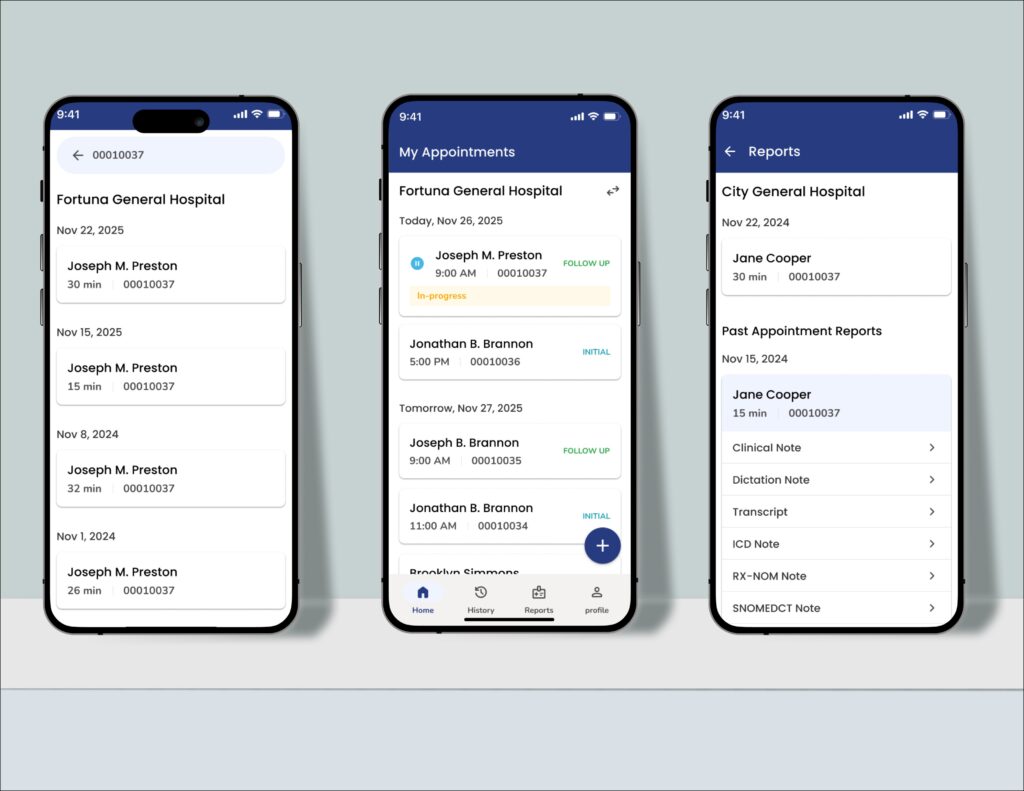
Key focus areas included:
- HIPAA aligned system architecture
- Role specific dashboards for clinical and administrative users
- Secure authentication integrated into workflow
- Structured data visualization to support care decisions
- Clean interface hierarchy to reduce decision fatigue
By aligning compliance requirements with user centered design principles, the platform supported both regulatory alignment and operational efficiency.
This project reinforces a broader lesson. Healthcare SaaS UX must be grounded in clinical reality, regulatory knowledge, and disciplined design execution.
Final Perspective
Healthcare SaaS UX design requires subject matter expertise across compliance, clinical operations, and human centered design. Organizations that treat usability as a patient safety strategy rather than a visual exercise build platforms that scale responsibly and support the professionals who rely on them every day.
Balancing HIPAA compliance and usability is not a compromise. It is the standard for modern healthcare software.
FAQs
1. What is Healthcare SaaS UX design?
Healthcare SaaS UX design focuses on creating secure, compliant digital platforms such as EHR systems and telehealth applications. The goal is to improve clinical workflows, enhance usability for providers, and protect sensitive patient data while meeting regulatory requirements.
2. How do you design a HIPAA compliant healthcare application?
A HIPAA compliant healthcare application requires encrypted infrastructure, role-based access control, audit logging, secure authentication, and privacy-conscious interface design. Compliance must be embedded into the system architecture from the start rather than added later.
3. Why is EHR usability important?
EHR usability directly impacts physician efficiency, documentation accuracy, burnout rates, and patient safety. Poorly designed interfaces increase operational friction and clinical risk, while intuitive workflows support better healthcare outcomes.
4. What are the main UX challenges in telehealth platforms?
Common telehealth UX challenges include onboarding friction, technical troubleshooting complexity, authentication barriers, and limited visual feedback during remote consultations. Addressing these issues improves adoption and patient-provider experience.
5. How can healthcare dashboards improve clinical decisions?
Healthcare dashboards improve clinical decision-making by prioritizing abnormal results, displaying trends over time, reducing visual clutter, and presenting actionable insights clearly. Well-designed dashboards help clinicians respond faster and more accurately.
6. How do you reduce cognitive overload in medical software?
Cognitive overload can be reduced by simplifying workflows, limiting non-critical alerts, using progressive disclosure, applying smart defaults, and maintaining consistent interface patterns. Thoughtful UX design ensures clinicians can focus on patient care instead of navigating complexity.
More on Design
UI/UX Design Best Practices for Enterprise Software in 2026