
Inside Modern Appointment Booking Systems
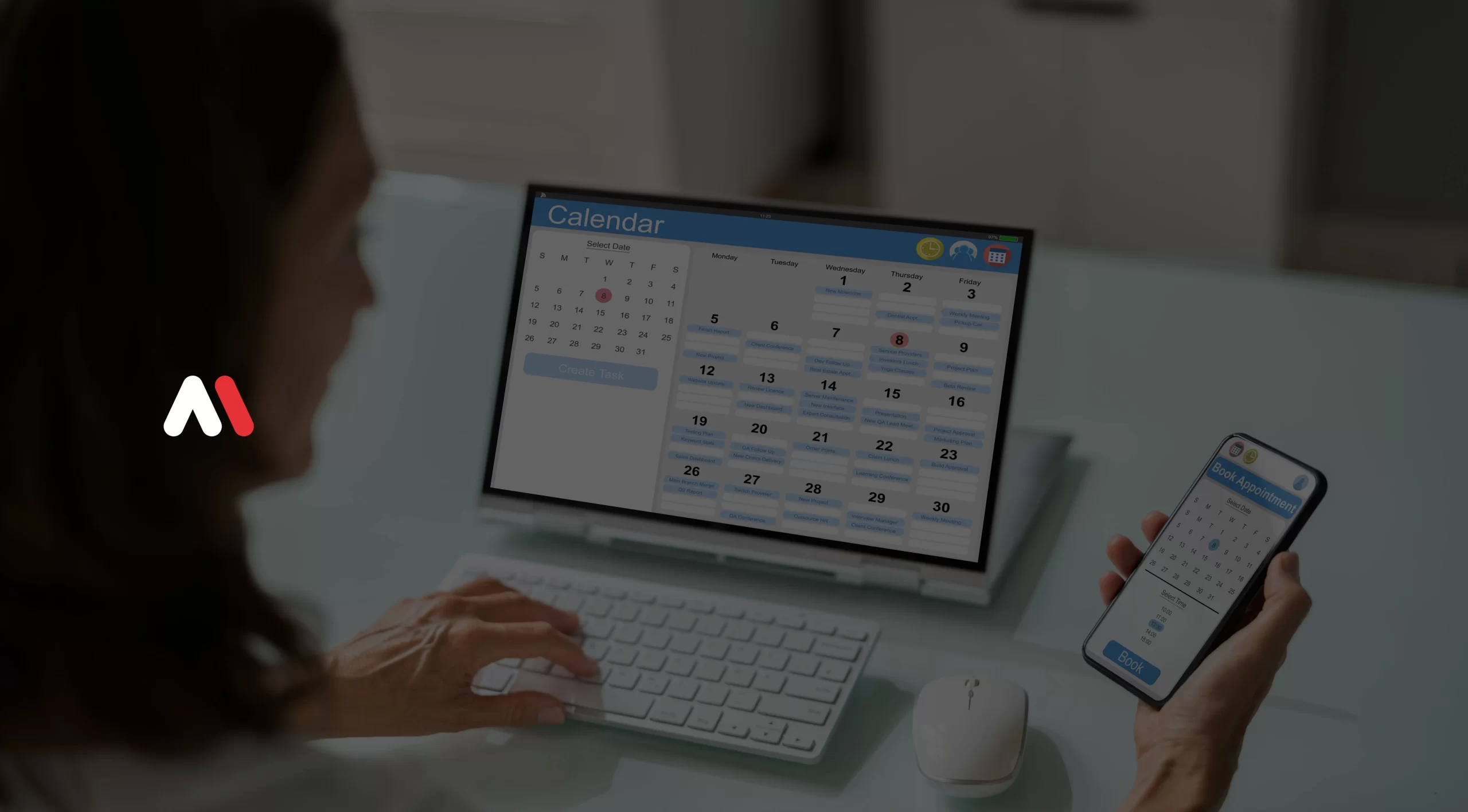
Customers expect to book appointments as easily as they order food, reserve a hotel, or schedule a ride. They want to see real time availability, choose a convenient time, receive instant confirmation, and make changes without calling a business. At the same time, organizations need scheduling systems that prevent conflicts, optimize staff utilization, automate repetitive work, and integrate with existing business applications.
This shift has made appointment booking software development a strategic investment rather than a convenience feature. Whether serving patients, financial advisors, technicians, educators, or consultants, businesses increasingly depend on intelligent scheduling platforms that support both customer experience and operational efficiency.
According to Grand View Research, the global appointment scheduling software market continues to grow as organizations accelerate digital transformation initiatives and invest in workflow automation. This growth reflects the increasing demand for scheduling platforms that can scale alongside evolving business operations.
What Makes Modern Appointment Booking Software Different?
Modern appointment booking software does far more than display available time slots. Behind every successful booking lies a scheduling engine that evaluates business rules, resource availability, customer preferences, service requirements, payment workflows, notifications, and calendar integrations before confirming an appointment.
Today’s booking systems are expected to connect seamlessly with CRMs, payment gateways, communication platforms, enterprise resource planning systems, and third party calendars. They must also deliver consistent experiences across desktop applications, mobile apps, and customer portals.
For organizations, this means fewer administrative tasks, better utilization of available resources, and a smoother customer journey from booking through follow up.
The Scheduling Engine That Powers Every Appointment
The scheduling engine is the intelligence layer of an appointment booking platform. Rather than simply storing appointments in a database, it continuously evaluates multiple business rules before presenting available time slots to users.
Without this logic, businesses face double bookings, inefficient staff allocation, scheduling conflicts, and poor customer experiences.
Managing Resource Availability and Staff Schedules
Every appointment begins with one fundamental question: Is the required resource available?
Resources may include healthcare professionals, consultants, technicians, classrooms, vehicles, meeting rooms, specialized equipment, or any asset required to deliver a service.
An effective scheduling engine evaluates:
- Resource availability by continuously tracking which employees, rooms, equipment, or assets are available before presenting appointment options.
- Staff schedules by considering working hours, shift rotations, approved leave, holidays, certifications, and role based assignments to ensure customers are matched with qualified personnel.
- Multiple locations by recognizing that branches may offer different services, operating hours, or resource availability, allowing businesses to manage scheduling across distributed teams.
- Capacity management by supporting one on one appointments as well as group sessions, workshops, training classes, or shared resources where multiple customers can book the same time slot until capacity is reached.
Together, these scheduling rules ensure every appointment is both operationally feasible and aligned with business policies.
Building Smarter Time Management
Scheduling is not simply about finding an empty hour on the calendar. Every appointment carries timing constraints that affect operational efficiency throughout the day.
Modern appointment booking software evaluates several timing variables before generating available slots.
These include:
- Service duration, allowing businesses to assign different appointment lengths based on the selected service or customer requirements instead of relying on fixed time blocks.
- Buffer periods, which create preparation or cleanup time before or after appointments, helping organizations avoid delays and maintain consistent service quality.
- Time zones, enabling customers and staff in different regions to book appointments without confusion by automatically converting times while storing schedules in a standardized format.
- Recurring appointments, allowing organizations to schedule weekly consultations, therapy sessions, maintenance visits, subscription services, or training programs without requiring customers to repeat the booking process each time.
When these factors are managed together, businesses gain more accurate schedules while customers experience fewer disruptions.
Supporting Flexible Booking Changes
Even carefully planned appointments sometimes need to change. Modern scheduling platforms are designed to handle these situations without creating additional administrative work.
Key capabilities include:
- Rescheduling, allowing customers or administrators to select alternative appointment slots while automatically updating calendars, availability, and related workflows.
- Cancellation policies, enabling organizations to define advance notice requirements, cancellation windows, late cancellation fees, or refund rules that are applied consistently across every booking.
- Waitlists, which automatically notify eligible customers when cancellations create new availability, helping businesses recover otherwise lost appointment opportunities.
These capabilities reduce manual coordination while improving resource utilization and customer satisfaction.
Automation That Extends Beyond Appointment Confirmations
One of the greatest advantages of modern appointment booking software is its ability to automate operational tasks that traditionally consume valuable staff time.
Instead of relying on manual emails or phone calls, businesses can automate communication and workflow management throughout the appointment lifecycle.
Common automation capabilities include:
- Payment processing, allowing customers to pay deposits, complete full payments, or receive invoices during the booking journey without separate administrative steps.
- Notifications, including booking confirmations, reminder emails, SMS messages, push notifications, and follow up communications that help reduce missed appointments and improve customer engagement.
- External calendar synchronization, enabling two way integration with Google Calendar, Microsoft Outlook, and Apple Calendar so appointments remain consistent across multiple platf orms without duplicate entries.
- CRM synchronization that automatically updates customer records after bookings, cancellations, or completed appointments, ensuring sales and support teams always work with current information.
- Workflow automation that can trigger surveys, feedback requests, loyalty programs, or internal task assignments once an appointment is completed.
These automated workflows improve operational consistency while allowing employees to focus on delivering services instead of managing administrative tasks.
Security, Compliance, and Cloud Architecture: Building Booking Platforms That Scale
A scheduling platform may appear simple from the customer’s perspective, but behind every confirmed appointment is an application responsible for protecting sensitive information, processing transactions, and maintaining real time availability across thousands of users. As businesses grow, these platforms must deliver reliability, performance, and security without compromising the user experience.
Protecting Customer Data with Enterprise Grade Security
Appointment booking software often stores personally identifiable information, payment details, and, in some industries, protected health information. Security should therefore be built into every layer of the application rather than added later.
Key security practices include:
- Role based access control ensures employees only access the information necessary for their responsibilities, reducing unnecessary exposure of sensitive data.
- Data encryption protects information both while it is stored and while it is transmitted between users, applications, and third party services.
- Secure authentication and authorization strengthen account protection through techniques such as multi factor authentication, OAuth, and session management.
- Audit logs maintain a complete history of booking activities, helping organizations investigate issues and meet regulatory requirements.
- API security protects integrations with payment gateways, CRMs, and external calendars through authentication tokens, rate limiting, and continuous monitoring.
These controls help businesses build customer confidence while reducing operational and compliance risks.
Compliance Depends on Your Industry
Different industries operate under different regulatory frameworks, making compliance a critical consideration during appointment booking software development.
Organizations should evaluate requirements such as:
- HIPAA for healthcare providers managing patient information.
- GDPR for businesses collecting or processing personal data from individuals in the European Union.
- PCI DSS for organizations accepting online payments.
- SOC 2 aligned practices for SaaS providers seeking stronger operational and security controls.
Rather than treating compliance as a separate project, successful organizations incorporate these requirements into application architecture, data management, and development processes from the beginning.
Scalable Architecture Supports Long Term Growth
As booking volumes increase, applications must continue delivering fast response times without creating scheduling conflicts or system outages.
A scalable appointment booking platform typically includes:
- Cloud infrastructure that automatically scales computing resources during periods of high booking demand.
- API driven architecture that simplifies integrations with CRM platforms, payment gateways, communication tools, and business applications.
- Microservices that allow scheduling, notifications, payments, and reporting to scale independently as business requirements evolve.
- Real time synchronization to keep calendars, staff availability, and customer bookings accurate across every connected system.
- Monitoring and observability tools that help engineering teams detect issues before they affect customers.
This architectural approach enables organizations to support future growth without repeatedly rebuilding core scheduling capabilities.
How AI and Agentic AI Are Transforming Appointment Scheduling
Artificial intelligence is changing appointment scheduling by improving decision making rather than replacing it. Instead of simply displaying available time slots, AI can analyze historical booking patterns, customer behavior, and operational data to make scheduling more efficient.
Practical AI applications include:
- Recommending appointment times based on customer preferences, staff utilization, and historical demand.
- Predicting potential no shows so businesses can send targeted reminders or proactively fill vacant slots.
- Forecasting seasonal demand to help organizations plan staffing requirements more accurately.
- Identifying scheduling bottlenecks that affect customer wait times or operational efficiency.
- Personalizing appointment recommendations using previous customer interactions and service history.
The next evolution is Agentic AI, where intelligent software agents complete scheduling tasks with minimal human involvement.
Instead of waiting for instructions after every booking request, AI agents can coordinate multiple actions within predefined business rules.
For example, an AI agent can:
- Check staff availability across multiple locations.
- Compare customer preferences with resource availability.
- Suggest alternative appointment times when schedules change.
- Automatically manage waitlists after cancellations.
- Coordinate updates across calendars, CRM platforms, and notification systems.
- Escalate only complex scheduling exceptions to human administrators.
When implemented responsibly, Agentic AI reduces administrative effort while helping businesses deliver faster and more responsive customer experiences.
Case Study: Building Better Patient Experiences Beyond the Appointment
While scheduling is often the first interaction a patient has with a healthcare provider, delivering a seamless healthcare experience requires much more than an online booking interface. Every touchpoint before, during, and after an appointment contributes to patient satisfaction and operational efficiency.
This is where AcmeMinds’ work on Patient Xperience Boost (PXB) demonstrates an important principle. Rather than treating appointments as isolated transactions, the platform was built to simplify the broader patient journey through intuitive digital experiences, streamlined workflows, and improved accessibility for both patients and healthcare providers.
The project focused on creating a connected healthcare experience where patients could interact with healthcare services more easily while providers benefited from more efficient operational processes. It reinforced a key lesson we apply across digital product development: the greatest business value comes when scheduling, communication, user experience, and operational workflows function as one unified ecosystem instead of disconnected features.
Whether building healthcare platforms or appointment booking software for other industries, successful solutions extend beyond calendar management. They create connected digital experiences that reduce administrative effort, improve customer satisfaction, and support long term scalability.
Final Thoughts
Customers rarely think about the technology behind a successful appointment. They simply expect the experience to be fast, accurate, and convenient.
For businesses, however, every booking depends on sophisticated scheduling logic, intelligent automation, secure architecture, and reliable integrations working together behind the scenes.
Whether supporting healthcare providers, financial advisors, educational institutions, professional services, or field operations, investing in custom appointment booking software development enables organizations to improve operational efficiency, reduce administrative workload, and deliver more consistent customer experiences.
At AcmeMinds, we design and develop scalable appointment booking platforms that combine intelligent scheduling, secure cloud architecture, modern integrations, and intuitive user experiences to help businesses grow with confidence.
FAQs
1. What is appointment booking software?
Appointment booking software is a digital solution that allows customers to schedule appointments online while automating availability management, reminders, payments, cancellations, calendar synchronization, and administrative workflows.
2. How does appointment scheduling software prevent double bookings?
Modern scheduling software uses real time availability checks, business rules, resource allocation, and database level validation to ensure the same staff member, room, or resource cannot be booked simultaneously.
3. Can appointment booking software integrate with Google Calendar and Microsoft Outlook?
Yes. Most enterprise appointment booking platforms support two way synchronization with Google Calendar, Microsoft Outlook, and other calendar applications through secure APIs, ensuring appointments remain consistent across connected systems.
4. What security features should appointment booking software include?
A secure booking platform should include role based access control, encryption, secure authentication, audit logging, API protection, regular backups, and compliance measures appropriate for the industry, such as HIPAA, GDPR, or PCI DSS.
5. How does AI improve appointment scheduling?
AI helps businesses optimize scheduling by recommending appointment times, predicting no shows, automating reminders, forecasting demand, improving resource allocation, and identifying scheduling inefficiencies through data analysis.
6. Should businesses build custom appointment booking software instead of using an off the shelf solution?
Organizations with unique workflows, compliance requirements, integration needs, or scalability goals often benefit from custom appointment booking software because it can be tailored to specific business processes while providing greater flexibility, ownership, and long term adaptability.