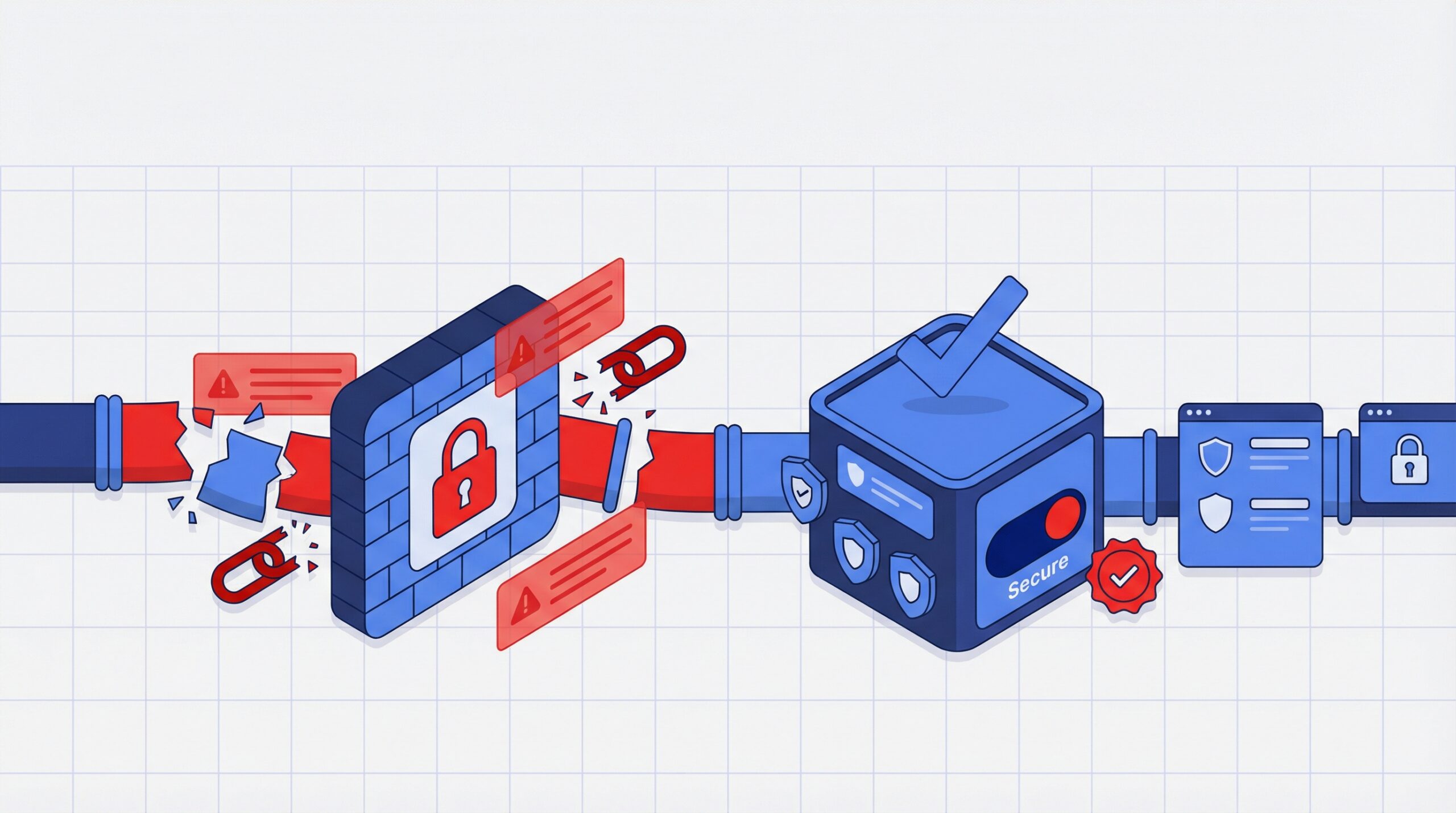
Healthcare Cybersecurity & Compliance Guide

Healthcare cybersecurity is no longer limited to firewalls and antivirus software. It now encompasses enterprise cybersecurity strategy, regulatory compliance, information security governance, network security architecture, and continuous cybersecurity monitoring.
For healthcare SaaS platforms, hospitals, and digital health startups, cybersecurity is directly tied to operational continuity and patient trust. The importance of cybersecurity in healthcare cannot be overstated. A single cybersecurity attack can disrupt clinical workflows, expose protected health information, and result in regulatory penalties.
Healthcare organizations must approach cybersecurity as a structured discipline that integrates data security, IT security, internet security, and computer security into a unified cybersecurity framework.
What Is Cybersecurity in Healthcare
What is cybersecurity in a healthcare context? It is the practice of protecting clinical systems, patient data, medical devices, cloud infrastructure, and digital platforms from cyber threats and cybersecurity threats.
Healthcare cybersecurity includes:
– Protection of electronic health records
-Defense against ransomware and phishing attacks
-Securing APIs and third-party integrations
-Ensuring compliance with federal and state regulations
-Maintaining network security across distributed environments
Cybersecurity solutions in healthcare must balance strict compliance requirements with usability for clinicians and administrators.
The Importance of Cybersecurity in Healthcare
Healthcare organizations face some of the highest cybersecurity risk levels across industries. According to the Cost of a Data Breach Report by IBM, healthcare continues to report the highest average breach cost, reaching 10.93 million USD per incident in 2023.
The impact of cyber security attacks in healthcare includes:
-Operational downtime affecting patient care
-Legal liability and regulatory fines
-Loss of patient trust
-Increased cybersecurity insurance premiums
-Delayed enterprise partnerships
A proactive cybersecurity strategy reduces these risks and positions organizations for sustainable growth.
Core Cybersecurity Certification Requirements
Healthcare technology platforms must demonstrate compliance through recognized cybersecurity certification standards. Enterprise buyers and hospital systems routinely require formal validation before onboarding vendors.
HIPAA Compliance
HIPAA establishes mandatory safeguards for protecting Protected Health Information in the United States. Compliance requires documented administrative controls, technical safeguards such as encryption and access restrictions, and physical protections for infrastructure.
From a technology perspective, HIPAA demands:
-Strong role-based access control
-Encryption of data at rest and in transit
-Audit logging of user activity
-Formal incident response procedures
-Business Associate Agreements with vendors
HIPAA is not a one time exercise. It requires ongoing risk assessments and policy enforcement.
SOC 2 Certification
SOC 2 certification evaluates internal controls against defined trust principles, including security, availability, confidentiality, processing integrity, and privacy.
For healthcare SaaS companies selling into enterprise markets, SOC 2 Type II is often expected. It verifies that cybersecurity controls are not only designed appropriately but also operate effectively over time.
SOC 2 strengthens enterprise cybersecurity credibility and shortens procurement cycles.
HITRUST Certification
HITRUST consolidates multiple security standards into a comprehensive healthcare specific framework. It provides measurable scoring, structured risk assessment, and harmonized compliance mapping.
Large hospital systems and insurers frequently prefer HITRUST certified vendors because it reduces due diligence complexity.
Global Information Security Standards
Healthcare companies operating internationally often align with ISO 27001 to formalize their information security management systems. Risk modeling and governance practices frequently reference the NIST Cybersecurity Framework to guide policy development and incident response.
Types of Cybersecurity Controls Required in Healthcare
Healthcare cybersecurity is layered. Effective protection requires coordinated implementation across infrastructure, applications, data, and governance.
Network Security ensures segmentation between production and non-production environments. Firewalls, intrusion detection systems, and secure remote access controls limit exposure to external threats.
Data Security focuses on encryption standards. Healthcare platforms should use AES 256 encryption for stored data and TLS 1.2 or higher for transmitted data. Encryption key management practices must be strictly governed.
Application Security involves secure coding standards, automated vulnerability scanning, penetration testing, and hardened API authentication. Healthcare APIs must implement rate limiting and strong authorization controls to prevent abuse.
Identity and Access Management enforces least privilege principles. Multi-factor authentication, secure session handling, and periodic access reviews reduce insider and credential based threats.
Cybersecurity Monitoring centralizes logging through Security Information and Event Management systems. Continuous monitoring enables rapid detection of anomalies and supports compliance audits.
Each control layer reduces cybersecurity risk. Together, they form a defensible enterprise cybersecurity posture.
Building a Cybersecurity Strategy from Day One
Enterprise cybersecurity success depends on early integration. A cybersecurity plan must begin during architecture design, not after launch.
Security by design includes threat modeling, secure software development lifecycle practices, DevSecOps automation, and formal cybersecurity policy documentation. Continuous cybersecurity assessment ensures that new features and integrations do not introduce unmanaged risk.
Organizations that embed cybersecurity into product architecture reduce remediation costs and accelerate cybersecurity certification readiness.
Case Example: Accelerated SOC 2 Type II Certification in 90 Days
AcmeMinds partnered with PXB to architect a secure healthcare platform aligned with enterprise cybersecurity and compliance requirements. Instead of treating compliance as post development documentation, security controls were engineered directly into infrastructure, authentication systems, logging frameworks, and cloud configurations from the outset.
Security was embedded across identity management, encrypted communications, access governance, monitoring systems, and risk management workflows to ensure the platform was audit ready from day one.
For SOC 2 readiness, we designed a Trust Services Criteria aligned control framework covering Security, Availability, and Confidentiality. The scope included formal policy development, structured audit logging and centralized monitoring rules, user lifecycle governance, documented risk assessments, control ownership mapping, and evidence collection mechanisms aligned to audit requirements.
Controls were operationalized within engineering workflows, ensuring that compliance artifacts were generated continuously rather than assembled retroactively.
The result was successful SOC 2 Type II certification within 90 days. Because controls were architected into the system from inception, there was no major rework, no last minute remediation cycles, and no documentation scramble.
The accelerated certification timeline strengthened enterprise credibility, improved audit defensibility, and demonstrated disciplined cybersecurity engineering execution while preserving business momentum.
Advanced Cybersecurity Habits for Modern Healthcare Teams
Healthcare cybersecurity requires more than strong tools and formal certifications. Even mature organizations experience cybersecurity breaches not because they lack knowledge, but because secure behavior is not embedded into daily engineering workflows. Building high trust healthcare systems demands operational discipline that extends beyond compliance checklists.
Modern healthcare teams should prioritize continuous cybersecurity monitoring rather than annual reviews. Structured cybersecurity training strengthens cybersecurity awareness across engineering, DevOps, and operations teams. Regular incident response simulations prepare organizations for real world cybersecurity attacks where speed and clarity determine impact.
Beyond these fundamentals, four advanced practices significantly reduce cybersecurity risk.
First, treat every internal service as exposed. Internal networks are no longer inherently safe due to compromised laptops, leaked credentials, and cloud misconfigurations. Architecture should follow zero trust principles where every service authenticates and authorizes every request, even within internal environments.
Second, shift security checks into the development pipeline. Security should not be a final stage review. Integrating SAST and DAST scans, dependency validation, secret detection, and automated build break rules within CI CD pipelines prevents high severity vulnerabilities from reaching production. Early detection reduces remediation cost and audit friction.
Third, apply least privilege continuously rather than as a one-time configuration. Roles evolve and permissions accumulate over time, increasing the risk of lateral movement during an attack. Monthly access reviews, removal of dormant accounts, and just in time access for administrative privileges reduce unnecessary exposure.
Fourth, log as if forensic reconstruction will be required. Many teams collect logs but lack proper correlation and context. Centralized logging pipelines integrated with a SIEM platform should monitor authentication anomalies, unusual access patterns, and cross-system activity. Enriched log metadata enables rapid investigation and containment if a cybersecurity incident occurs.
At AcmeMinds, these practices are embedded into delivery models. Zero-trust service boundaries are enforced by default. CI CD pipelines include automated vulnerability detection and dependency monitoring. Access rights are audited programmatically, and no engineer holds permanent production access. Centralized logging systems enrich telemetry with contextual signals to enable fast root cause analysis.
This operational approach transforms cybersecurity from a reactive compliance burden into a measurable, continuously improving capability. For healthcare organizations operating in highly regulated environments, disciplined execution is what separates theoretical security from real resilience.
FAQs
1. What is cybersecurity in healthcare?
Cybersecurity in healthcare refers to protecting digital health systems, patient data, and clinical infrastructure from cyber threats through structured information security controls and regulatory compliance. It ensures that sensitive medical information remains confidential, accurate, and available when needed for patient care.
2. What cybersecurity certification is required for healthcare SaaS?
HIPAA compliance is mandatory when handling protected health information in the United States. SOC 2 is commonly required for enterprise contracts. HITRUST further strengthens healthcare specific trust validation by aligning security controls with regulatory and industry standards.
3. What are the types of cybersecurity controls in healthcare?
Healthcare cybersecurity includes network security, data security, application security, identity and access management, and continuous cybersecurity monitoring. Together, these controls protect systems from unauthorized access, data breaches, and operational disruptions.
4. How can I find a cybersecurity expert near me?
Organizations should evaluate cybersecurity consulting services with proven healthcare experience, strong certification expertise, and enterprise level case studies. Look for partners who understand regulatory compliance, risk assessment, and secure system architecture for healthcare environments.
5. Why is cybersecurity important in healthcare?
Healthcare data is highly sensitive and financially valuable. Cyber attacks can disrupt patient care, compromise confidential records, and result in significant financial and reputational damage. Strong cybersecurity safeguards patient trust and ensures operational continuity.
6. What should a healthcare cybersecurity plan include?
A healthcare cybersecurity plan should include risk assessments, documented security policies, encryption standards, access control frameworks, monitoring tools, incident response procedures, and ongoing staff training. A structured plan reduces vulnerabilities and ensures long term regulatory compliance.
More on Security

Cybersecurity Essentials for Modern Enterprises