AWS vs Firebase for SaaS Backend
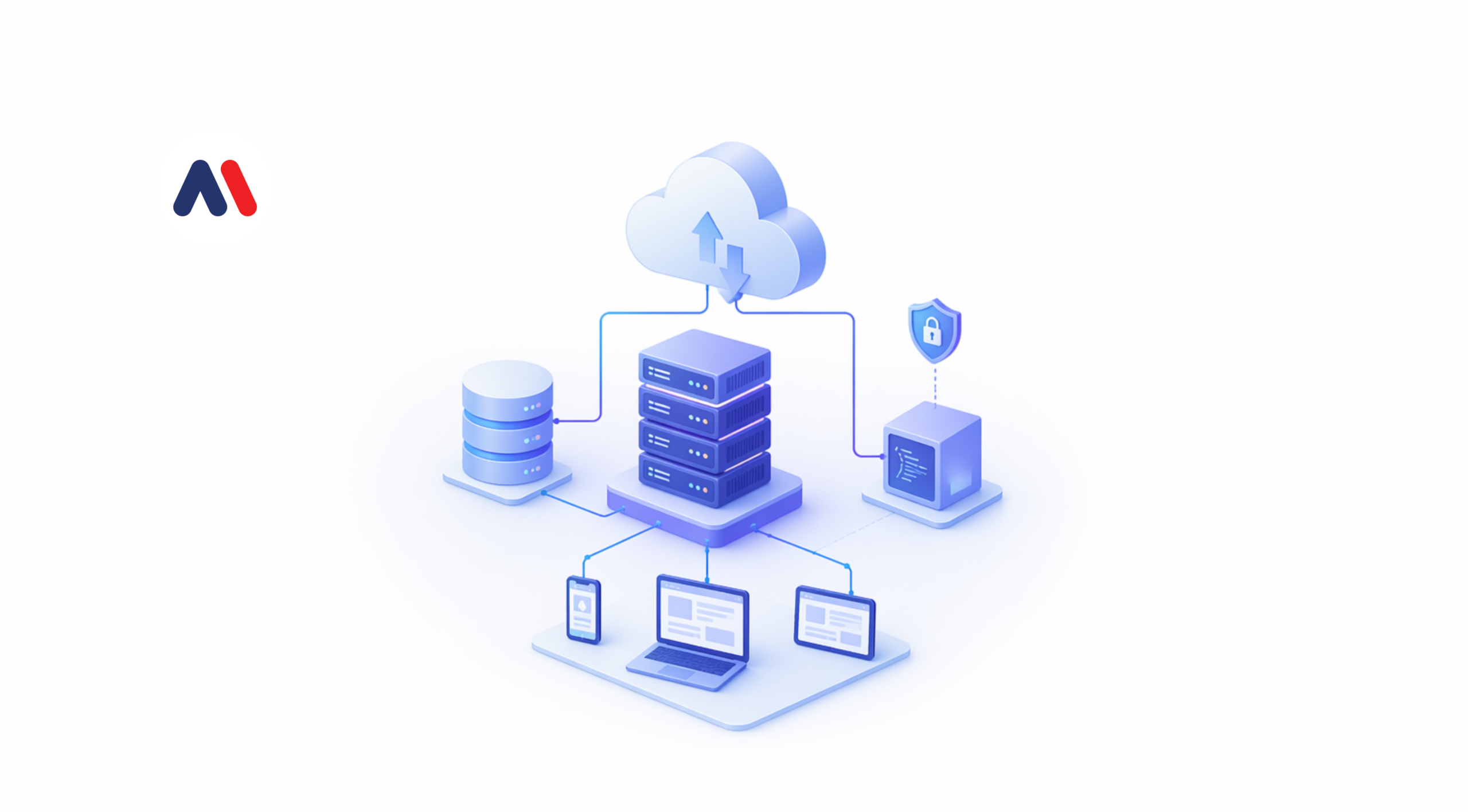
AWS vs Firebase for SaaS backend is one of the most common architecture decisions founders and engineering teams face when building scalable applications. Both platforms offer powerful capabilities, but they are fundamentally different in how they handle scalability, performance, and long term system design.
Choosing the wrong backend early can lead to performance bottlenecks, rising infrastructure costs, and complex re-engineering as your SaaS product grows. This guide provides a detailed comparison of AWS and Firebase across architecture, scalability, cost behavior, and real-world SaaS use cases to help you make the right decision.
Why Backend Choice Impacts SaaS Scalability
Backend infrastructure plays a critical role in determining how well your application can scale as demand grows. It directly influences how efficiently your system handles increasing users, data, and workloads without compromising performance or reliability.
A well-designed backend ensures your application can smoothly support:
- Rapid user growth from thousands to millions without performance drops
- Efficient data storage, access, and real-time retrieval at scale
- High system reliability even during peak traffic loads or sudden spikes
- Optimized infrastructure costs as usage expands over time
On the other hand, choosing the wrong architecture early often leads to technical bottlenecks. As the product scales, teams are forced into expensive re-engineering efforts, rewriting core systems, and reworking data flows. This not only increases development cost but also slows down product evolution and market responsiveness.
AWS Overview for SaaS Applications
AWS is a comprehensive cloud infrastructure platform that provides granular control over computing, storage, networking, and security – making it a strong foundation for building and scaling SaaS products.
It enables teams to design highly flexible and production-ready architectures using modular services that can scale independently based on demand.
Key components commonly used in SaaS architectures include:
- EC2 for scalable virtual server hosting
- Lambda for serverless compute and event-driven workflows
- RDS for managed relational databases
- DynamoDB for high-performance NoSQL workloads
- API Gateway for secure API management and routing
- S3 for durable and scalable object storage
AWS is widely adopted by production-scale SaaS platforms because it offers deep customization, strong reliability, and enterprise-grade control over infrastructure – making it suitable for applications that need to scale efficiently while maintaining security and performance.
Firebase Overview for SaaS Applications
Firebase is a Backend-as-a-Service (BaaS) platform designed to accelerate development and power real-time, scalable applications without managing complex infrastructure.
It helps teams build and ship faster by providing ready-to-use backend services that integrate seamlessly with modern frontend frameworks.
Key features include:
- Firestore for flexible, document-based database management
- Firebase Authentication for secure and easy user management
- Cloud Functions for serverless backend logic execution
- Firebase Hosting for fast and reliable frontend deployment
Firebase is optimized for speed of development, real-time data synchronization, and rapid MVP delivery – making it ideal for startups and teams that want to validate and launch products quickly.
Real-World SaaS Use Cases and Decision Context
Choosing between AWS and Firebase depends heavily on the type of SaaS product you are building and how it is expected to scale.
Early-stage SaaS MVP
- Firebase is often preferred due to faster development cycles and minimal infrastructure setup
- Ideal for validating product ideas with limited engineering resources
Real-time SaaS applications
- Firebase performs well for chat systems, live dashboards, and collaborative tools
- Built-in real-time synchronization reduces backend complexity
High-growth SaaS platforms
- AWS is better suited for handling large-scale user growth and complex workloads
- Offers flexibility to scale individual services independently
Enterprise SaaS applications
- AWS provides stronger control over data isolation, compliance, and infrastructure customization
- Preferred for industries requiring strict governance such as healthcare and finance
Detailed Architecture Comparison Table
| Feature | AWS | Firebase |
|---|---|---|
| Architecture Type | Infrastructure as a Service | Backend as a Service |
| Best Use Case | Scalable and enterprise SaaS | MVPs and real-time apps |
| Scalability Model | Fully customizable horizontal scaling | Automatic scaling with limitations |
| Multi Tenancy Support | Advanced and flexible isolation models | Limited native tenant isolation |
| Database Options | SQL and NoSQL supported | Firestore and Realtime Database |
| Security Control | Advanced IAM and VPC control | Rule based security model |
| Performance Optimization | Deep tuning and optimization possible | Abstracted performance layer |
| Development Speed | Slower initial setup | Very fast prototyping |
| Cost Behavior at Scale | Optimizable with engineering effort | Can increase rapidly with usage |
| Vendor Lock-in Risk | Low to moderate | High due to tightly coupled services |
| Enterprise Readiness | Strong enterprise adoption | Limited enterprise flexibility |
Multi-Tenancy and Scalability Analysis
Multi-tenancy is a core architectural requirement for SaaS platforms, as it determines how efficiently a single system can serve multiple customers while maintaining performance, security, and isolation.
Different backend approaches handle multi-tenancy in different ways, directly impacting scalability and enterprise readiness.
AWS enables flexible multi-tenant architectures such as:
- Separate database per tenant for full data isolation
- Shared database with schema-level isolation for optimized resource usage
- Fully isolated infrastructure models for enterprise-grade security and compliance
Firebase provides a more simplified model with:
- Shared database structures across tenants
- Limited built-in tenant isolation patterns requiring custom implementation
Because of this, AWS is often preferred for enterprise SaaS platforms where strict data separation, compliance requirements, and advanced scalability control are critical for long-term growth.
Performance Trade-offs and Limitations
Both AWS and Firebase offer strong performance capabilities, but each comes with specific trade-offs that impact SaaS applications at scale.
Firebase limitations:
- Complex querying capabilities compared to relational databases
- Performance degradation in large-scale multi-tenant systems
- Limited control over backend optimization
AWS considerations:
- Requires proper architecture design to avoid latency issues
- Serverless functions may introduce cold start delays
- Higher operational complexity without experienced engineering teams
Understanding these trade-offs early helps prevent scalability issues as the application grows.
Security and Compliance Considerations
Security is a key differentiator when choosing between AWS and Firebase for SaaS applications, especially as products scale and handle sensitive user data.
AWS provides enterprise-grade security capabilities such as:
- IAM-based role-level access control for fine-grained permissions
- Virtual Private Cloud (VPC) isolation for secure network environments
- Advanced encryption management for data at rest and in transit
Firebase offers a more simplified security model with:
- Rule-based security controls for database and storage access
- Built-in authentication layer for quick user management
Because of its deeper control over infrastructure and security configurations, AWS is better suited for compliance-heavy industries such as healthcare, finance, and enterprise SaaS where strict data governance and regulatory adherence are critical.
Final Architecture Decision Framework
A strong SaaS architecture decision should always be driven by business needs rather than tooling preference.
Key factors to evaluate include:
- Stage of product maturity
- Expected user scale and growth trajectory
- Compliance and data security requirements
- Engineering team capability and expertise
There is no universal winner between AWS and Firebase – the right choice depends entirely on your product context and long-term vision.
When to Choose What
Choose Firebase when:
- You need to build and launch an MVP quickly
- Real-time features are a core requirement (chat, live updates, dashboards)
- Your product is early-stage with minimal infrastructure complexity
- Speed of development is more important than deep customization
Choose AWS when:
- You are building a scalable SaaS platform for long-term growth
- You require strict security, compliance, or data isolation
- Your system needs advanced architecture control and flexibility
- You expect enterprise-level usage and complex infrastructure needs
Conclusion
Backend architecture decisions directly impact how your SaaS product scales, performs, and evolves over time. While Firebase enables rapid development and faster time to market, AWS provides the flexibility and control required for long-term scalability and enterprise readiness.
The right choice depends on your product stage, growth expectations, and technical requirements. Teams that align architecture decisions with long-term scalability goals avoid costly re-engineering and build systems that scale efficiently from day one.
At Acmeminds, we don’t just build products, we help teams make the right architecture decisions from day one. Because the real difference between MVP success and expensive rebuilds is not speed… it’s choosing the right foundation before you scale.
FAQs
1. What is AWS used for in SaaS?
AWS is used to build scalable and customizable backend infrastructure for SaaS applications, supporting complex workloads, multi-tenant systems, and enterprise-grade security.
2. Is Firebase suitable for scalable SaaS applications?
Firebase is suitable for early-stage and real-time SaaS applications but may face limitations in complex, large-scale multi-tenant systems.
3. Which is better for SaaS startup AWS or Firebase?
Firebase is better for early MVP development, while AWS is better for long term scalable SaaS platforms.
4. Can AWS and Firebase be used together?
Yes, many architectures use Firebase for frontend speed and AWS for backend scalability.
5. Is Firebase cheaper than AWS?
Firebase is cost effective at small scale but AWS becomes more efficient at large scale with proper optimization.
6. What is the biggest mistake when choosing a SaaS backend?
Choosing based on development speed alone without considering long term scalability and architecture requirements.