
AI Strategies for Modernizing Legacy Enterprise Systems
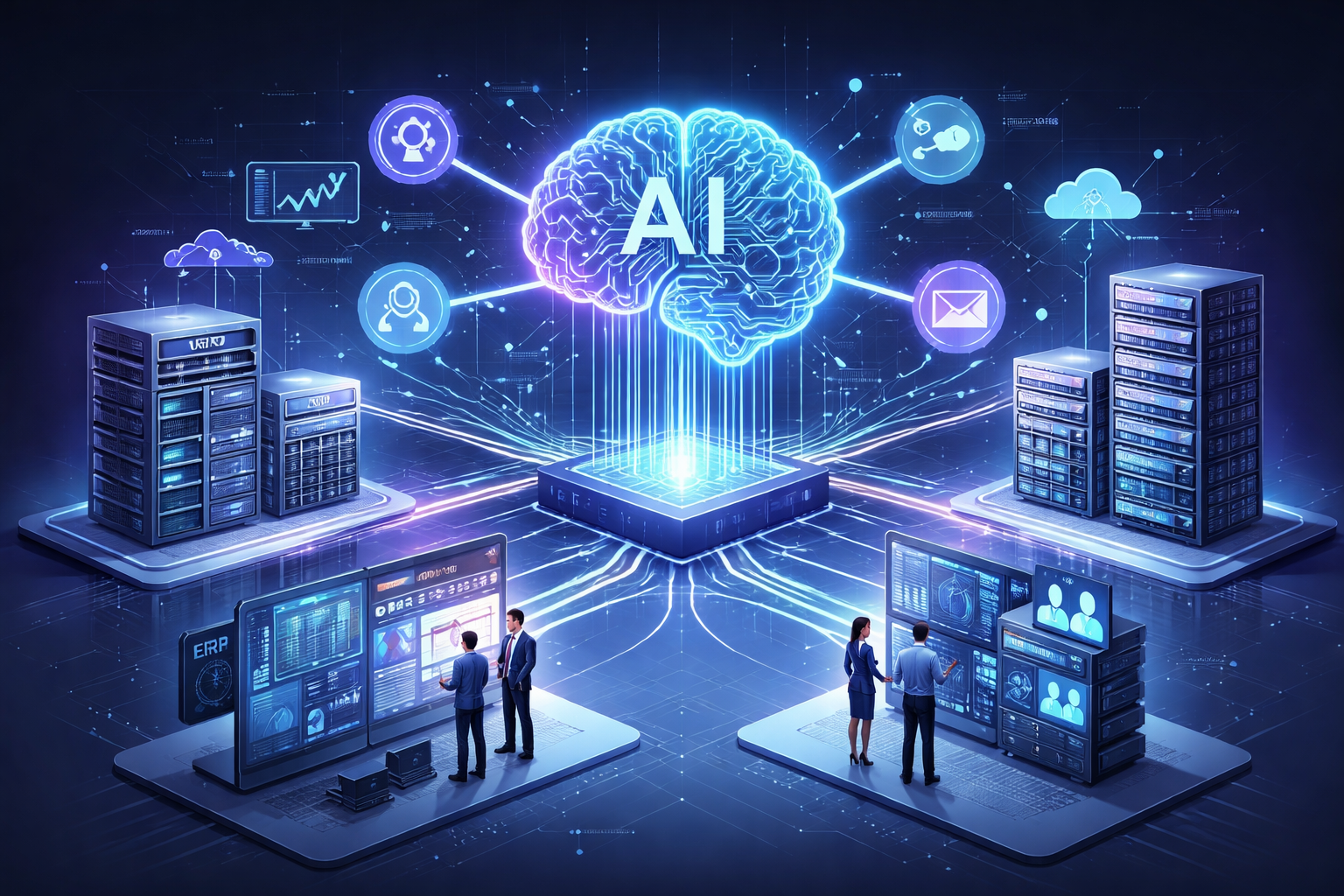
Many large organizations still rely on legacy systems for mission‑critical operations. ERP platforms, supply chain software, financial systems, and customer record platforms often contain decades of operational knowledge.
These systems are reliable but were not built for modern AI, cloud infrastructure, or real‑time analytics. Replacing them entirely is costly, disruptive, and risky.
A smarter approach is AI driven modernization. By layering AI capabilities on top of existing systems, enterprises can automate workflows, unlock predictive insights, and extend platform value – without replacing core infrastructure. This strategy preserves operational stability while moving toward a modern, intelligent enterprise architecture.
Legacy Platforms in the AI Era
Legacy enterprise platforms still power many critical business processes. Systems such as ERP platforms, mainframe applications, supply chain software, financial transaction systems, and customer data platforms remain the operational backbone of large organizations.
While these systems are reliable and deeply embedded in business operations, they were built for earlier technology environments. As a result, many organizations face architectural limitations that slow innovation and data driven decision making.
Common characteristics of legacy enterprise systems
Monolithic application architecture
Many legacy platforms were designed using tightly coupled architectures where application logic, databases, and user interfaces are interconnected. This structure makes it difficult to introduce new features or integrate modern technologies without impacting the entire system.
Batch processing operations
Legacy systems often rely on scheduled batch processing instead of real time event driven workflows. Operational insights and reporting may therefore be delayed, limiting the ability to respond quickly to changing business conditions.
Fragmented enterprise data
Operational data is frequently distributed across multiple independent systems that were not designed to share information seamlessly. These data silos reduce visibility across departments and make enterprise analytics difficult.
High technical debt and maintenance costs
Older platforms often require specialized infrastructure, legacy programming expertise, and complex maintenance processes. Over time this increases operational cost and slows technology modernization.
Despite these limitations, legacy systems contain one of the most valuable assets within an enterprise: years of structured operational data that reflect real business activity.
Why AI is the most practical path to legacy modernization
Artificial intelligence enables organizations to modernize capabilities without replacing core enterprise systems. Instead of redesigning legacy architectures, AI services can be deployed as intelligence layers that interact with existing platforms through APIs, data pipelines, and integration frameworks.
This approach allows enterprises to introduce advanced capabilities while preserving existing infrastructure investments.
Key capabilities introduced through AI modernization include:
• Machine learning operationalization to analyze enterprise data and generate predictive insights
• Predictive analytics platforms for forecasting demand, risks, and operational performance
• Decision intelligence systems that deliver real time insights and alerts to business teams
• Enterprise AI orchestration that connects multiple applications and workflows
• Real time anomaly detection to identify operational risks and unusual patterns early
By deploying these capabilities incrementally, organizations can transform legacy platforms from passive systems of record into intelligent enterprise systems that support proactive decision making.
This layered modernization strategy reduces migration risk while enabling enterprises to gradually build more adaptive and data driven technology ecosystems.
AI Capabilities That Extend Legacy Platform Value
Intelligent workflow automation
Many enterprise workflows built around legacy systems still depend on repetitive manual tasks such as transaction validation, document processing, order updates, etc. AI powered automation platforms can analyze historical workflow patterns and execute these tasks automatically with minimal human intervention. By integrating machine learning models with process automation tools, organizations can streamline high volume operational processes, reduce manual errors, and significantly improve processing speed and operational efficiency.
Predictive analytics and forecasting
Legacy enterprise systems often contain years of structured operational data that can be used to train machine learning models. Predictive analytics systems analyze this data to identify trends, patterns, and potential future outcomes. Enterprises commonly apply these models to use cases such as demand forecasting, inventory optimization, financial risk detection, and predictive maintenance. These insights allow organizations to shift from reactive decision making to proactive operational planning.
Intelligent enterprise data integration
Enterprise data pipelines are a foundational component of AI driven modernization strategies. These pipelines extract operational data from legacy systems, transform it into structured formats, and deliver it to enterprise analytics platforms and machine learning environments. Modern data architectures may include feature engineering pipelines, data governance frameworks, and real time analytics platforms that ensure AI systems can continuously learn from enterprise data while maintaining consistency and reliability.
Decision intelligence systems
Decision intelligence platforms translate AI generated insights into actionable recommendations for business teams. These systems analyze real time operational data streams and deliver alerts, forecasts, and optimization suggestions directly to operational leaders. For example, supply chain managers may receive early alerts about potential inventory shortages while finance teams may detect abnormal transaction patterns sooner. By embedding AI insights directly into operational workflows, decision intelligence systems improve the speed and quality of enterprise decision making.
Enterprise Implementation Examples
Enterprises across industries are already applying AI to extend the capabilities of legacy platforms without replacing core systems. The following examples illustrate how targeted AI integration can deliver measurable operational improvements.
AI driven inventory forecasting in manufacturing
Manufacturing organizations often rely on legacy supply chain platforms that lack advanced forecasting capabilities. By integrating machine learning demand forecasting models with existing systems, companies can analyze historical sales data, seasonal trends, and supplier lead times to generate more accurate demand predictions. This allows operations teams to optimize inventory levels, reduce stockouts, and improve production planning while continuing to use their existing supply chain infrastructure.
Intelligent workflow automation in order management
Retail and service organizations frequently operate legacy order management systems that require manual validation and processing steps. AI powered automation layers can analyze incoming transactions, validate records, and route exceptions automatically. This reduces manual workload for operations teams and improves order accuracy and fulfillment speed. By introducing automation on top of the existing platform, organizations can streamline fulfillment workflows without disrupting the core order management system.
These examples demonstrate how enterprises can modernize legacy systems incrementally by introducing AI capabilities that enhance operational intelligence and automate high volume business processes.
Best Practices for AI Driven Modernization
Successful AI modernization programs require more than deploying machine learning models. Enterprises need a structured approach that aligns technology architecture, data strategy, and operational processes.
Start with high value operational use cases
Identify workflows where automation or predictive analytics can deliver measurable efficiency, cost savings, or revenue impact. Early wins help build internal support for broader AI adoption.
Build a strong enterprise data foundation
AI systems rely on accessible, high quality, and well governed data. Establish robust data pipelines, governance frameworks, and consistent data management practices.
Adopt incremental modernization strategies
Implement AI solutions through targeted pilots before scaling across the organization. This iterative approach reduces risk and allows teams to refine models and workflows.
Design scalable integration architecture
Use APIs, middleware platforms, and event driven integration patterns to connect AI services with legacy systems. A flexible integration layer ensures long term scalability.
Align cross functional teams
AI initiatives require collaboration between data engineers, machine learning specialists, enterprise architects, and business leaders. Cross team alignment ensures solutions address real operational needs.
Risks Governance and Technical Considerations
AI modernization initiatives require careful governance and architectural planning.
Data quality and data readiness
AI systems depend on clean structured and well governed enterprise data. Poor data quality can significantly reduce model accuracy and decision reliability.
Integration complexity in legacy environments
Many legacy platforms lack modern APIs and event interfaces. Enterprises often need middleware platforms data pipelines or API layers to enable reliable AI integration.
Security and regulatory compliance
AI systems frequently process sensitive operational and customer data. Strong identity management access controls and compliance frameworks are essential.
Model governance and lifecycle management
Machine learning models require monitoring validation and periodic retraining. Without governance models can drift and produce unreliable predictions.
Change management and operational adoption
AI driven workflows alter how teams interact with enterprise systems. Organizations must invest in training processes and operational alignment to ensure successful adoption.
The Future of Intelligent Enterprise Platforms
Enterprise platforms are evolving into layered architectures where legacy systems remain the transaction and data backbone, while modern intelligence layers deliver automation and decision support.
In this model, operational data from legacy applications flows into real time data pipelines and enterprise AI platforms. Machine learning models analyze this data to generate forecasts, detect anomalies, and optimize business processes. These insights are then operationalized through decision intelligence systems and automated workflows that interact directly with enterprise applications.
A growing trend in this architecture is the use of agentic AI systems. These systems act as autonomous orchestration layers that monitor operational signals, interpret business context, and trigger actions across multiple enterprise platforms.
Over time, enterprise technology stacks will increasingly follow a structure where legacy platforms manage transactions, AI systems generate intelligence, and autonomous agents coordinate workflows. Organizations that successfully implement this architecture will gain faster operational visibility, better resource optimization, and the ability to adapt business processes in near real time.
AcmeMinds AI Expertise
Modernizing enterprise systems with artificial intelligence requires expertise across enterprise architecture, data engineering, machine learning and platform integration.
AcmeMinds helps organizations design and deploy AI driven enterprise solutions that integrate seamlessly with legacy infrastructure. Our specialists build automation platforms, predictive analytics systems and agentic AI architectures that transform enterprise operations while minimizing disruption.
If your organization is exploring how artificial intelligence can unlock new value from existing enterprise systems our team can help design a modernization strategy aligned with your business goals.
Explore AcmeMinds AI solutions
FAQs
1. What is AI legacy system modernization?
AI legacy modernization is the process of enhancing existing enterprise systems with artificial intelligence capabilities such as automation, predictive analytics, and decision intelligence.
2. Can AI integrate with older enterprise systems?
Yes. AI services can connect to legacy platforms through APIs, middleware, data pipelines, and enterprise integration architecture.
3. What benefits does AI bring to legacy systems?
AI improves operational efficiency, enables predictive insights, reduces manual work, and extends the lifespan of enterprise platforms.
4. What is agentic AI in enterprise environments?
Agentic AI refers to autonomous software agents that analyze enterprise data, make decisions, and execute workflows across enterprise systems.
5. Do companies need to replace legacy systems to adopt AI?
No. Most organizations introduce AI layers on top of legacy platforms so they can modernize capabilities without replacing core systems.